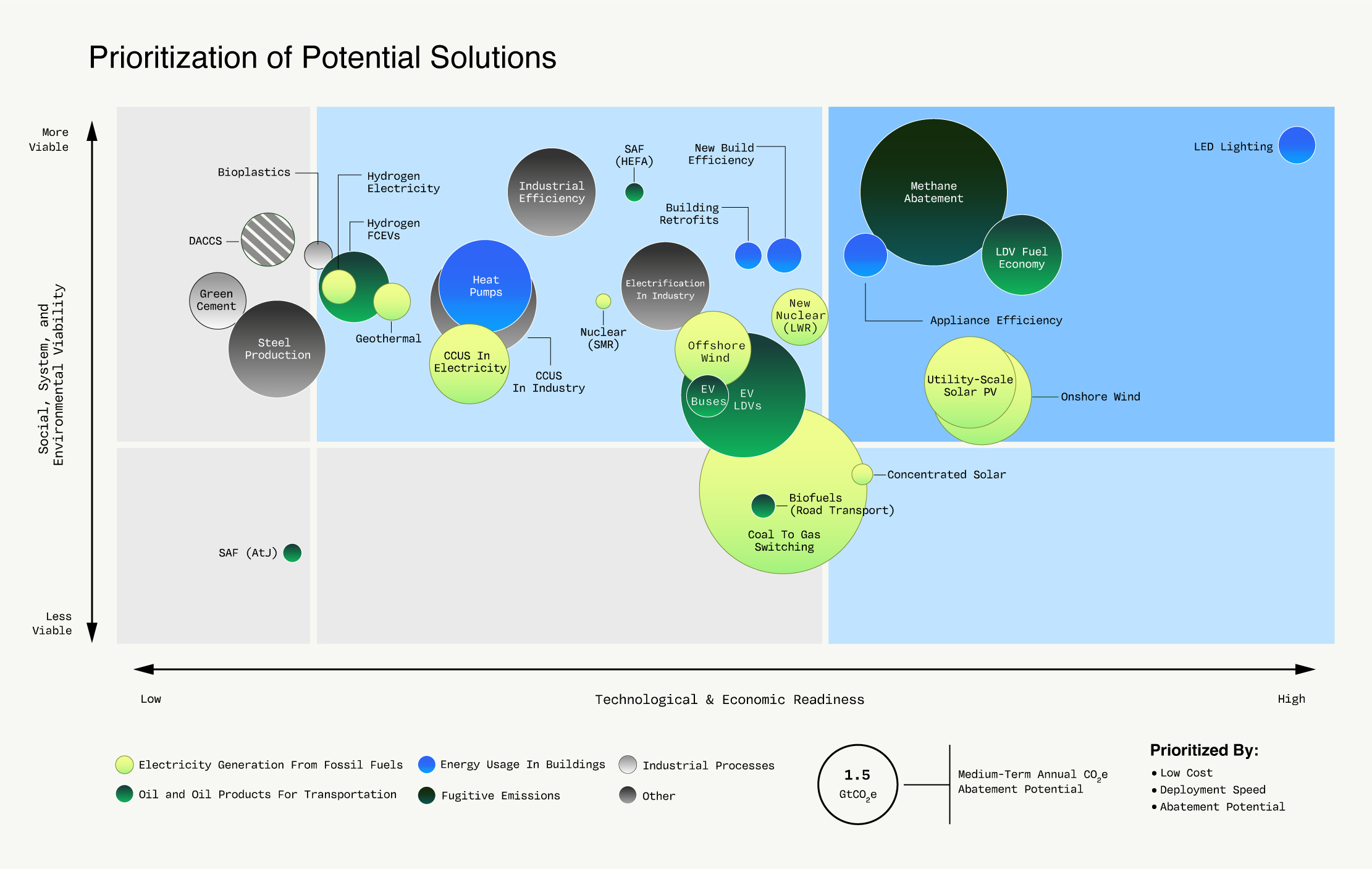
Delivering more energy and less emissions requires disciplined prioritization. OpenMinds uses structured analysis to identify the highest-leverage opportunities for near-term impact.


The world needs more dependable, affordable energy to support human prosperity and modern life.

The most effective solutions cut emissions across entire energy systems while maintaining reliable supply.

Priority solutions scale quickly using proven technologies and practical pathways.

Solutions must strengthen the energy system while delivering measurable economic and reliability gains.
Our framework draws on publicly-available datasets, peer-reviewed research, market data, industry analysis, and direct engagement with subject-matter experts across energy and climate disciplines. We continuously refine prioritization based on new data, cost curves, technology performance, and system constraints.
01
How quickly can the solution scale within existing regulatory, infrastructure, and capital constraints?
02
What is the cost per ton of CO₂e reduced, and how does it compare to alternatives?
03
Can the solution scale to gigaton-level impact across geographies?
04
Does the solution unlock additional decarbonization pathways or remove key barriers to progress?
OpenMinds applies a 360° systems approach to evaluate energy and climate solutions across key factors including cost, speed to deploy, scalability, infrastructure readiness, abatement potential, capital needs, and regulatory feasibility, focusing on 1–2 high-impact opportunities at a time.
Understand energy sources, consumption patterns, and emissions to spot crucial action areas.
Identify and systematically evaluate a long list of potential technical solutions.
Identify the solutions with the highest potential for impact through 203X and actions required to drive adoption.
Assess solution feasibility at a country-level, based on varying resources and priorities, to calibrate deployment rates.

Rapidly reduce methane leaks from oil, gas, and energy systems.
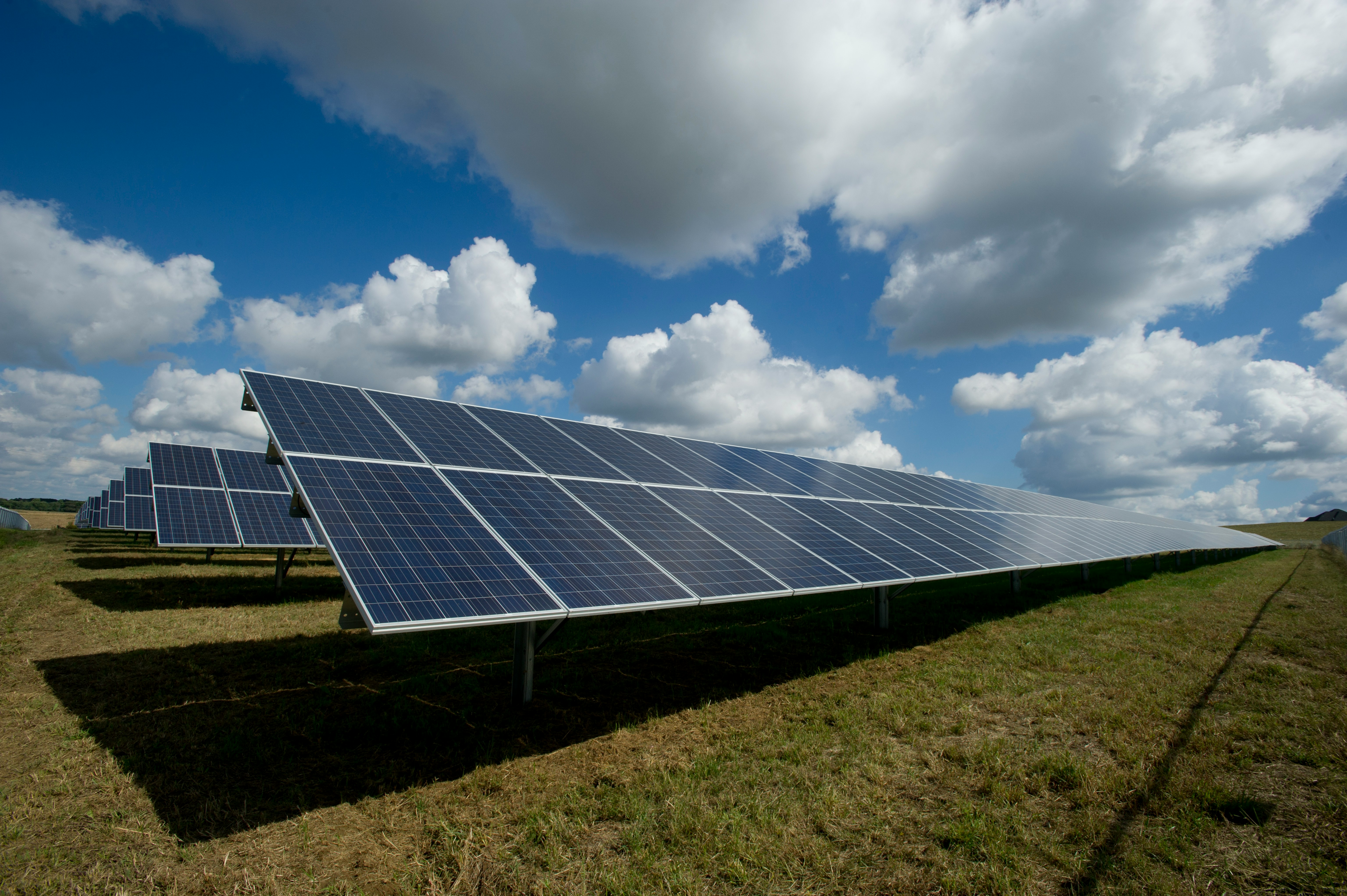
Scale clean electricity generation from abundant renewable resources.

Replace coal power with lower-emissions generation sources.

Capture and permanently sequester CO₂ from power plants and heavy industry.

Provide reliable, zero-carbon power from nuclear plants.

Electrify passenger vehicles to reduce oil demand and transport emissions.

Reduce emissions from heavy industry through efficiency and electrification.

Improve vehicle efficiency to reduce fuel use across the transport system.

Improve building design and equipment to lower energy demand.

Replace legacy heating systems with efficient electric heat pumps.
Answers to the most frequent questions about OpenMinds, our data-driven framework, and how we work to solve the Dual Challenge.
How does OpenMinds select which solutions to focus on?

OpenMinds prioritizes solutions using a data-driven framework that evaluates cost efficiency, deployment speed, scalability, and overall energy-system impact.
We focus on solutions that can deliver meaningful emissions reductions while strengthening reliable, affordable energy systems under real-world constraints such as infrastructure, capital availability, and regulatory feasibility.
Is the framework technology-neutral?
Yes. OpenMinds evaluates solutions based on data, system impact, and deployment potential—not ideology or sector affiliation. Our goal is to identify practical pathways that deliver more energy while reducing emissions, regardless of the specific technology or industry involved.
Does OpenMinds fund technologies?
No. OpenMinds is not an investor or grant-making organization. Instead, we catalyze progress by bringing together decision-makers across industry, academia, government, and nonprofits to form focused coalitions that remove barriers and accelerate real-world deployment.
How often is the framework updated?
The framework evolves continuously as new cost data, technology performance insights, and deployment experience become available. This ensures the solutions pathway remains grounded in current evidence and reflects the fastest, most practical opportunities for progress this decade.

.svg)

.svg)